Calming Sensory Clothing: 9 Tips to Find What Actually Works
Calming sensory clothing refers to garments chosen to reduce tactile discomfort throughout the day. Nine practical tips for adults on finding what actually works.
Calming sensory clothing is a term that gets used frequently without much explanation of what it actually means in practice. This guide breaks it down — what it is, how to find it, and nine tips that make a genuine difference for adults with clothing sensory sensitivity.
What is calming sensory clothing?
Calming sensory clothing refers to garments designed or chosen to reduce tactile discomfort and overstimulation. When clothing does not create ongoing physical distraction — through seam pressure, label irritation, fabric texture, or tight waistbands — it becomes easier to focus, relax, and get through daily tasks comfortably.
This is relevant for a wide range of adults: those with ADHD, fibromyalgia, sensory processing differences, anxiety, or simply heightened tactile sensitivity. A formal diagnosis is not required to benefit from more thoughtfully chosen clothing.
Note: Sensory sensitivity exists on a spectrum. If clothing regularly causes distraction or discomfort during your day, the tips below apply to you.
Tip 1: Start with seams
Before considering fabric, colour, or fit — look at the seams. Internal seams that sit against the skin are one of the most common sources of sensory discomfort in standard clothing. Traditional seams create a ridge that rubs, particularly at the shoulders, underarms, and toe area of socks.
Look for flat-lock seams, outward-facing seams, or fully seamless construction. For many adults with tactile sensitivity, this single change makes more difference than any other. When evaluating calming sensory clothing, seam construction is the first filter worth applying.
Tip 2: Fabric matters — but not just softness
What to actually look for in sensory-friendly fabrics
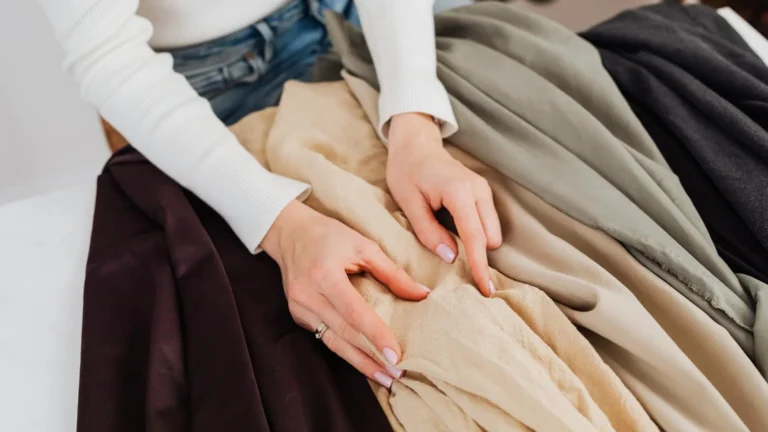
Softness at point of purchase is not a reliable indicator of how a fabric will feel after several hours of wear or multiple washes. What matters more is weave structure, temperature regulation, and how consistently the fabric behaves over time.
Natural fibres — organic cotton, bamboo, and modal — are consistently well-tolerated by adults with sensory sensitivity. They breathe, resist static, and maintain their texture across washes. Synthetic performance fabrics vary considerably; test before committing to multiples.
Tip 3: Consider fit direction
Fit preference in sensory clothing is highly individual. Some adults find looser, minimal-contact clothing more comfortable. Others benefit from a degree of compression, which provides proprioceptive input and a sense of groundedness — a pattern supported by occupational therapy research.
Pay attention to which direction works for you. If a close-fitting top consistently feels more settled than a loose one, build your wardrobe accordingly. Working with your own pattern is more effective than following general advice.
Tip 4: Address the waistband
Waistband pressure is one of the most common and most underrated sources of sensory discomfort. A tight or narrow waistband that digs in throughout the day creates persistent distraction that many adults simply learn to tolerate.
Look for wide, soft waistbands without visible elastic threading, or pull-on styles with flat drawstrings. The goal is zero awareness of the waistband mid-afternoon. If you are thinking about it at 3pm, it is not working well enough.
Tip 5: Account for temperature regulation
Temperature dysregulation is common in adults with sensory sensitivities. Clothing that does not breathe adequately can cause overheating, which intensifies tactile discomfort from other sources. Fabrics that wick moisture without becoming clingy perform significantly better in this regard.
Bamboo fabric handles temperature regulation well. High-quality merino wool is another strong option — it is genuinely soft and effective at managing temperature in both directions, despite assumptions based on the word wool.
Tip 6: Test before buying multiples
A garment that feels comfortable in the morning may perform differently by hour five — in different temperatures, positions, and activity levels. Wear a new piece through a full day before purchasing multiples. Some fabrics also soften slightly over two or three wears, which can change the assessment.
Tip 7: Map your specific triggers
Most adults with clothing sensory sensitivity have a specific set of triggers: labels, toe seams in socks, collar contact, waistband pressure, fabric noise, or texture when damp. Identifying your particular triggers — rather than applying generic sensory-friendly advice — makes shopping considerably more targeted and effective.
A brief written list of past clothing problems is genuinely useful as a shopping filter. It shifts the process from hoping something works to actively looking for garments that avoid your known issues.
Tip 8: Build a sensory capsule wardrobe
When specific garments consistently work well, prioritise them. Buy multiples of what works rather than continuing to experiment with new items. A wardrobe where every piece is reliably comfortable reduces decision fatigue significantly and removes the morning anxiety of not knowing whether a particular item will hold up through the day.
Our guide to building a sensory-friendly capsule wardrobe covers this approach in more detail.
Tip 9: Prioritise comfort without apology
Many adults feel that paying close attention to clothing comfort is excessive or unusual. It is neither. Tactile sensitivity is a real physiological experience, and building a wardrobe that accounts for it is a practical decision with measurable daily benefits. Calming sensory clothing is not a luxury or a workaround — it is simply clothing that works for how your nervous system actually functions.